Culture
Ethereum T shirts: Souvenir or Everyday Staple?
Choosing Ethereum T shirts after Devcon? Compare event references, graphic prominence and wardrobe usefulness before deciding what earns a place.

In this story
A useful first question when choosing Ethereum T shirts is whether the graphic needs a date. A city name and year can make a shirt worth keeping because they record a particular occasion. A graphic without that reference has a different job: it needs to remain something you want to wear on an ordinary day, when nobody around you is discussing the event.
Devcon’s official website lists Devcon 8 in Mumbai on 3–6 November 2026 and, in the supplied research retrieved on 13 November, marks it as wrapped. That provides a timely reason to consider the difference between a souvenir and a regular wardrobe choice. It does not establish what attendees wore, what merchandise was distributed or which designs they preferred.
There is also an important product distinction here. The Crypto Style Tees catalogue supplied for this article contains Ethereum headwear, rather than verified T-shirt designs. Those caps provide concrete examples of wording, layout and everyday styling decisions. They are not evidence of matching shirts or official Devcon merchandise. The shopping question remains useful across both garments: what exactly do you want the artwork to carry forward?
1. Start with the memory you want
Before looking closely at a graphic, decide what you want the garment to remember. An event souvenir might preserve a journey, a place or a few days spent with people you usually know through a screen. Its date can be its strongest feature. You may value that specificity even if you only wear it occasionally. Frequent wear is one measure of usefulness, not the only one.
An everyday Ethereum shirt faces a different test. Would you still choose it if your next conference were months away? Would the wording make sense over lunch with friends who have no interest in crypto? It need not appeal to everyone. It should, however, feel comfortable as part of your own clothes, without requiring you to deliver an explanation whenever you leave the house.
Our view is that both purposes deserve a clear brief. Buying a souvenir and then criticising it for looking event-specific misses what made it appealing. Buying an everyday graphic because it captures a passing mood can lead to a different disappointment. Decide which role matters most before comparing the artwork, rather than expecting every purchase to serve both equally well.
2. Read the references on Ethereum T shirts
Start with the most literal information: names, dates, locations and event titles. If those elements dominate a shirt, its connection to a particular occasion will remain visible after the occasion has passed. That can give it lasting personal meaning. It can also make it a less obvious choice for someone who simply wants to wear an Ethereum reference without suggesting a connection to that event.
Be precise about what an event reference proves. A graphic mentioning Mumbai would not, by itself, establish official Devcon affiliation. Nor should a buyer assume that a shirt was included with admission. The Ethereum Foundation’s announcement dated 14 July 2026 said Devcon 8 tickets included swag, but did not identify that swag as T-shirts. There is no basis here for describing a particular shirt as part of that package.
The practical test is simple: cover the event name and date in the product image, then reconsider the remaining artwork. If the appeal largely disappears, you probably value the souvenir element most. If the composition still interests you, the garment may have a second life beyond its occasion. Neither result determines quality; it clarifies why you would choose that particular design.
3. Follow the words into the layout
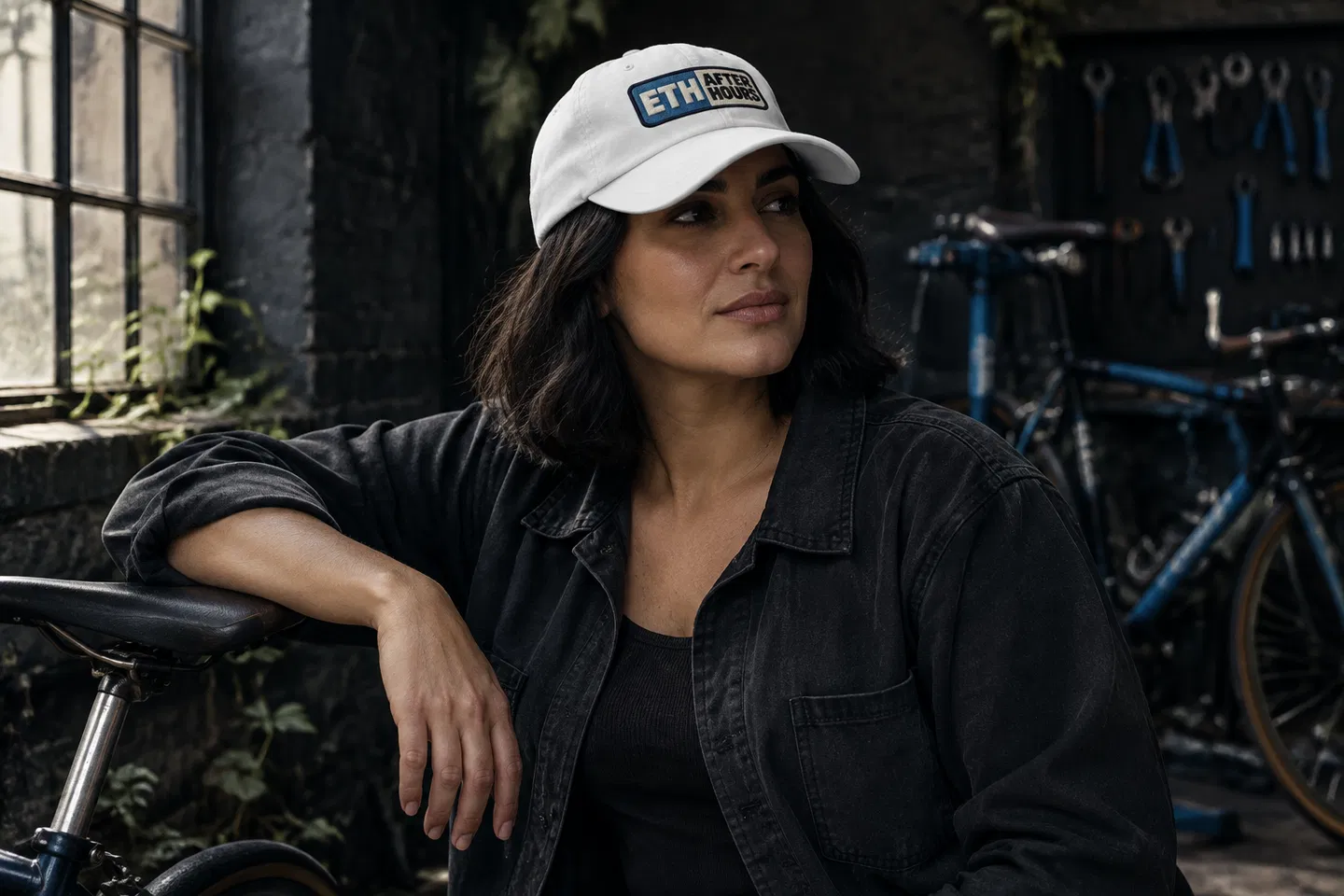
Without a verified sketch or design history, the useful place to begin is the finished artwork described in the catalogue. Crypto Style Tees’ Eth After Hours Standard Cap uses a divided layout that gives the ETH initials room to stand out. Its wording offers an Ethereum reference without naming a conference, city or year. That makes it a relevant comparison when considering calendar-independent clothing.
The distinction is in what the words ask the wearer to carry. ETH identifies the subject; After Hours introduces a time-of-day association rather than an event date. The catalogue connects that wording with late-night reading, conversation and building. That is the product’s creative story, not evidence about how Ethereum users spend their evenings. You can assess whether the phrase appeals without adopting that story as your own biography.
A second example, the Onchain Builder Standard Cap, combines bold wording with diagonal marks. Here, the text makes a more explicit statement about activity. Someone choosing between these designs can therefore compare the message as well as the visual arrangement: do they prefer network initials and a loose evening association, or wording that foregrounds making things? Neither needs an event date to be understood.
For a T-shirt, apply the same reading exercise to the actual product image. Identify which word catches your eye first, what the surrounding marks contribute and whether the smaller details matter to you. Avoid filling in what you cannot see. A product title alone cannot establish the size of a print, its position on the garment or the balance between front and back artwork.
4. Move from artwork to clothing
A graphic viewed in isolation and a garment worn with other clothes are different propositions. On a T-shirt, consider how the visible design sits alongside a jacket opening, a shirt worn unbuttoned or the waistband of your usual trousers. These are styling questions to check against the listing and your own wardrobe, rather than reasons to assume a particular fit or print placement.
The supplied headwear gives a concrete example of why the garment matters. The Eth After Hours Standard Cap has an unstructured baseball shape, a low-profile crown and a curved visor. Its artwork is embroidered on the front. Those details put the graphic in a different relationship with an outfit from a shirt print: the reference sits above the clothing rather than occupying part of the torso.
That difference can help someone who likes Ethereum imagery but is undecided about a graphic tee. A plain T-shirt with an Ethereum cap is one possible outfit. An Ethereum T-shirt with plain headwear is another. Our preference would be to start with one element carrying the main message, then judge the whole outfit. This is a styling suggestion, not a rule against wearing several graphics together.
5. Test it against clothes you own

The most useful wardrobe comparison is specific. Think of trousers you wore this week, the jacket you reach for when leaving home and the shoes already by the door. Would you wear the proposed shirt with those pieces? If every imagined outfit requires another purchase, pause. You may still love the design, but it has not yet demonstrated the everyday usefulness you are asking of it.
Try making two outfits in your head: one for a casual day out and one for the sort of social occasion you actually attend. For example, you might prefer a graphic T-shirt with jeans for the first and beneath an open overshirt for the second. Check whether enough of the artwork would remain visible to satisfy you. There is little benefit in choosing a message you intend to conceal every time.
Graphic prominence deserves its own decision. A large statement can be exactly what you want, while a smaller reference may feel easier alongside patterned clothes. Neither approach is inherently more tasteful or more authentically connected to Ethereum. The relevant question is whether you enjoy the level of attention the design invites. Judge that from the available images, rather than assuming that all crypto clothing has the same visual volume.
6. Give the souvenir its own test
An event shirt does not have to win the everyday comparison to justify its place. If you attended, a date-and-place graphic may be the detail that makes it valuable to you. If you did not attend, consider whether you like the artwork independently and whether its wording suggests a connection you would feel awkward explaining. Wearing an event reference is a personal choice; claiming attendance is a separate matter.
Before deciding, ask a few direct questions. Is the event reference the reason you want it? Would you keep it if you wore it only occasionally? Does the product information establish any affiliation that matters to you? For an everyday option, reverse the emphasis: do you like the actual composition, can you picture it with existing clothes, and does its message still appeal away from an Ethereum gathering?
Keep those answers separate from market excitement. A shirt does not need a price rally, a network announcement or another conference to become wearable. Bitcoin, XRP and Solana references can be assessed in the same practical way, although the wording and artwork will differ. Here, the decision is about an Ethereum garment and the place it could occupy in your week, not a judgement about any asset’s prospects.
What earns another wear
Our preference for an everyday piece is a graphic you would choose on a quiet day with nothing crypto-related in the diary. A souvenir can earn its place through a more particular attachment. After Devcon, the useful distinction is whether you want to keep a record of an occasion or make room for a recurring outfit. Read the words, inspect the artwork and picture the finished garment among clothes you already wear.