Culture
Solana clothing: choosing the graphic’s visual language
Choose Solana clothing by its words, imagery and shape, with a practical guide to Crypto Style Tees’ sofa-coin design across four styles.
In this story
A useful first question when choosing Solana clothing is what you want someone to notice: the words, an illustrated subject or an image with a sense of depth. Those choices lead to different kinds of graphic, even when the underlying crypto reference is the same.
Our ‘Lose Coins in Sofas, Not in Alt Markets’ family offers a specific starting point: a familiar household mishap turned into a crypto joke. Across a T-shirt, V-neck, tank top and long-sleeve T-shirt, the collection connects through that shared premise. Choosing between them means considering both the message and the shape you actually enjoy wearing.
The idea: a crypto reference with an everyday setting
A coin slipping between sofa cushions is easy to picture. Put that beside the language of altcoin markets and the joke gains a second reading. Someone unfamiliar with crypto can understand the household reference; someone who follows the space can recognise the market-related humour. That gives the collection a conversational starting point without requiring a technical explanation of Solana.
For us, that everyday connection is the interesting part. A network name can identify an interest, while a joke can reveal something about how you approach it. Here, the mood is self-aware. The catalogue’s story plays with the possibility of losing track of money, but the clothing should not be read as guidance about markets or a suggestion that any asset will recover its value.
The distinction matters when buying crypto clothing. You might like Solana, follow Ethereum development, recognise Bitcoin references and enjoy XRP or other crypto communities without wanting every outfit to make a sweeping declaration. A particular joke can be a more comfortable expression of interest. Choose it because the line feels like your sense of humour, rather than because you feel obliged to wear a network badge.
Three ways to read a graphic
The Solana Foundation’s Artist Award finalist article, published on 3 November 2026, provides a useful cultural reference for thinking about visual preferences. It identifies Degen Poet’s typewriter art, Grizz’s 3D work shared from wireframe to final render, and Pondy’s community illustrations and contributions to the awards branding. These are distinct practices, with different ways of directing attention.
The same announcement schedules the ceremony for 13 November 2026, from 7–9 pm at Somerset House in London. This is a reference to the published shortlist, not a report of winners or attendance. Nor does it establish any connection between those artists and Crypto Style Tees. Their practices offer a way into the design question; the clothing discussed here stands separately.
When words do the work
Typography-led graphics ask you to look at language as well as read it. The wording, spacing and relative size of letters can all affect the experience. As a buyer, ask whether you enjoy the sentence itself before considering how it is arranged. A striking treatment may attract you initially, but an irritating slogan will still be irritating once it is in your wardrobe.
‘Lose Coins in Sofas, Not in Alt Markets’ has a clear verbal premise. You can assess that premise from the product name without guessing at the artwork’s lettering. Does the comparison make you smile? Would you be happy explaining it if asked? Those questions are more useful than assuming that every Solana-related phrase will suit you simply because you follow the network.
When an illustration carries the idea
Illustration can give a viewer something to recognise before they read. A character, object or small scene can make an abstract subject easier to approach. The practical buying question is whether the pictured subject interests you independently of its crypto association. If the network reference disappeared, would you still like looking at the image?
Pondy’s inclusion in the Foundation’s shortlist is relevant as an example of an illustration-based practice within the community. It does not mean our sofa-coin collection uses Pondy’s work or shares its visual treatment. The catalogue story supplies the sofa-and-coins idea; it does not, by itself, verify how those objects are depicted. Check the product photographs for that distinction rather than treating descriptive copy as a picture.
When depth becomes the focal point
Dimensional imagery uses visual cues such as perspective, shading or overlapping forms to suggest volume. Grizz’s documented progression from wireframe to final render offers a useful reference for this kind of image-making. For clothing, the question is how clearly the resulting image reads at the size shown, especially when you move from a close-up to a photograph of the whole garment.
A rendered-looking image should not be confused with a physically raised print. An apparent shine or shadow can belong entirely to the graphic. None of the supplied details establishes a dimensional production method for this collection, so that is not a feature we claim. Keep the visual effect and the garment’s construction separate when comparing what you see with what a listing actually confirms.
The connections across this collection
These four pieces share the same named sofa-coin concept and Solana reference. That is the verified connection running through the collection. It gives you a consistent starting point while leaving the garment shape open. There is no need to invent four different personalities for four versions of the same idea, or to treat a change of neckline as a different cultural statement.
The supplied catalogue descriptions do not establish the precise lettering, colours, image placement or print dimensions across every version. Those details deserve a direct comparison in the product photographs. Look at each garment individually, rather than assuming that a familiar title guarantees an identical arrangement. A design you like in a close crop may feel different when you see its relationship to the neckline and sleeves.
A useful way to compare is to make two passes. First, read the message and decide whether it belongs in your wardrobe. Then look at the whole garment without zooming in. Notice where your eye goes and whether the overall shape suits the clothes you already wear. This separates affection for the joke from your response to the particular piece.
Choosing your Solana clothing shape
The T-shirt: start with your usual outfit
The Lose Coins in Sofas, Not in Alt Markets Solana T-shirt is a sensible starting point if a T-shirt is already part of your everyday wardrobe. Picture it with a specific pair of trousers you own. Straight-leg jeans or plain chinos are simple styling possibilities, allowing you to judge the graphic without adding another competing message.
Try thinking in complete outfits rather than isolated product photographs. If you usually wear an open overshirt, consider how much of the front would remain visible. A longer phrase needs enough exposure to make sense. That is a general styling consideration, not a claim about this design’s placement: use the product image to check where the actual words and artwork sit.
The V-neck: choose the neckline deliberately
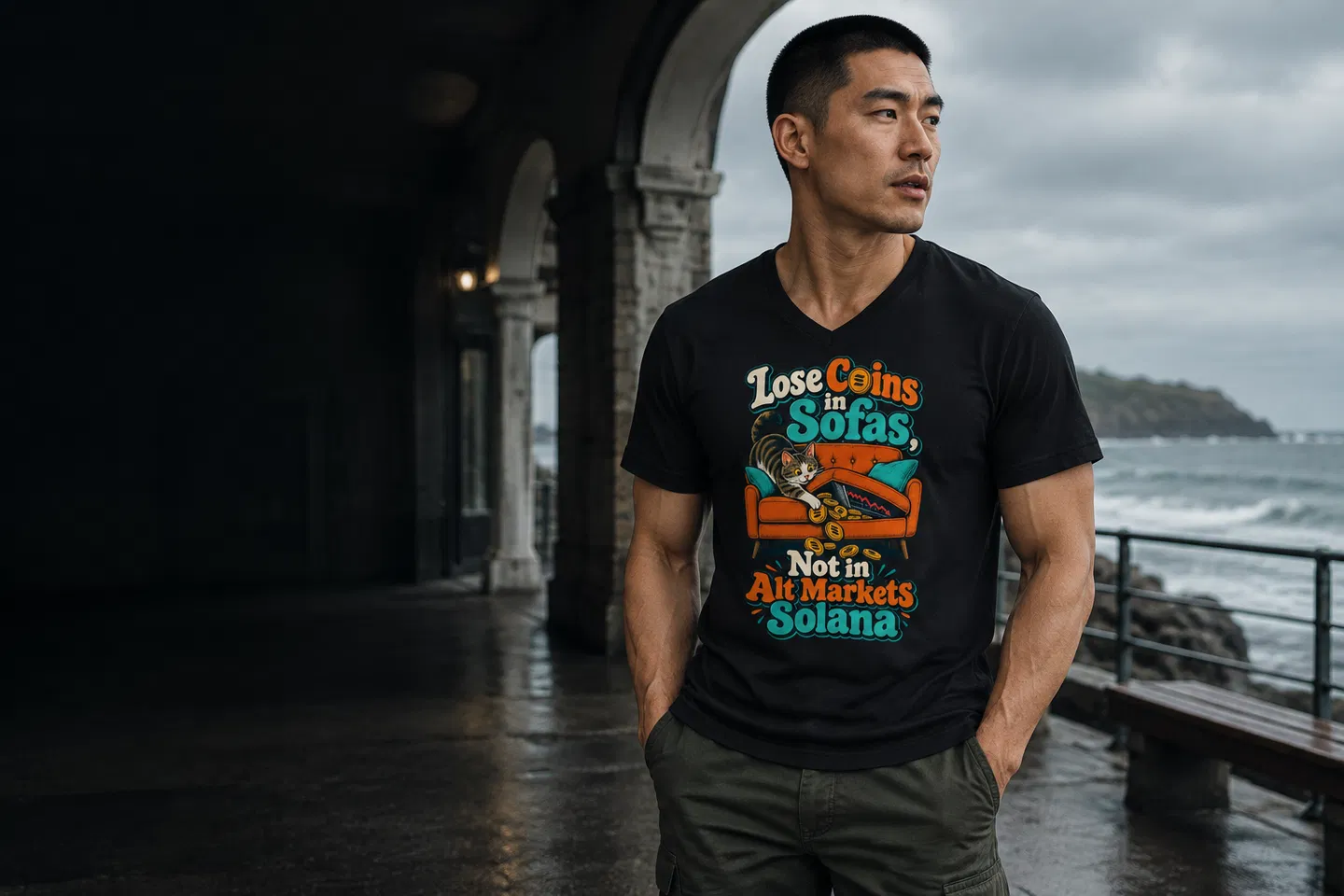
The Solana V-neck T-shirt carries the same named concept into a different neckline. Choose it if you already prefer that shape, rather than assuming a V-neck is automatically smarter or more flattering. Your preferred neckline is a practical wardrobe preference, and it can matter more to repeat wear than the appeal of a new graphic.
When comparing it with the T-shirt, look at the space between the neckline and the design in each product photograph. That relationship helps determine the overall visual balance. For styling, an open jacket and uncomplicated trousers are worth considering. You can keep the surrounding outfit quiet without needing to match every accessory to a colour in the artwork.
The tank: make room for a sleeveless option
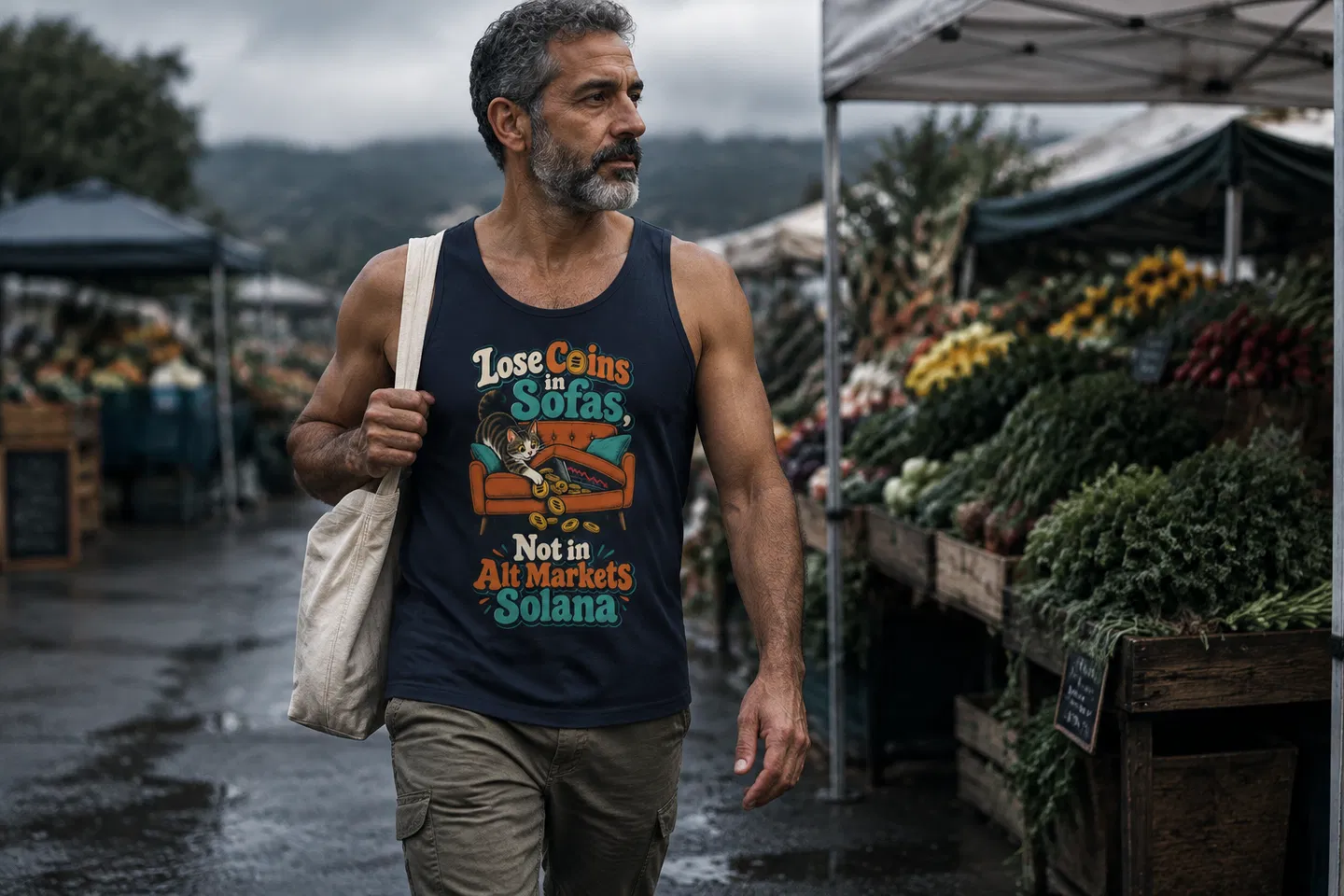
The Solana tank top is the sleeveless choice within this family. Its strongest reason for being in your wardrobe is straightforward: you like wearing tanks. It should not require an imagined festival, a gym persona or a particular kind of crypto event to justify it. Start with the situations in which you already choose a sleeveless top.
Worn on its own with relaxed trousers or shorts, a tank creates a different outline from a sleeved tee. An open shirt is another possible pairing if you prefer a layer. Check the product photographs to see how that might frame the graphic, and consult the listing’s measurements where provided. Do not assume your preferred fit transfers unchanged between garment types.
The long sleeve: consider the whole outline
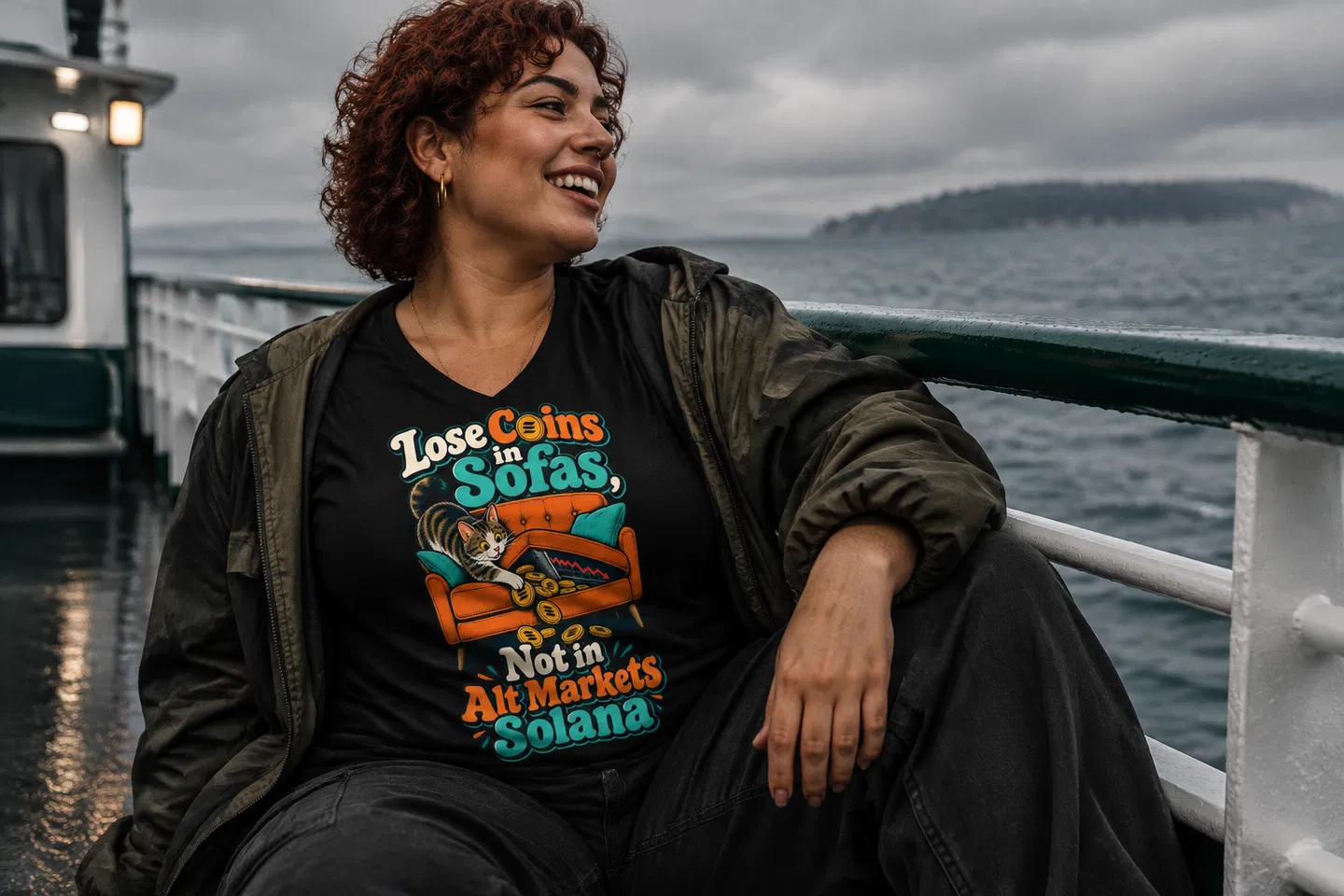
The Solana long-sleeve T-shirt offers the same collection idea with sleeves extending further down the arms. That changes the balance of an outfit even before you consider the artwork. If long-sleeve tops are already a regular choice for you, this version lets the joke fit that preference rather than asking you to adopt another silhouette.
Plain denim or simple trousers would be an easy starting combination. Look at a full-garment photograph as well as any detail view, since the sleeves contribute to the overall shape. The garment type alone does not establish fabric weight, warmth or suitability for particular weather. Make those decisions using confirmed product information, not assumptions attached to the words ‘long sleeve’.
One idea, chosen on your terms
The shortlist’s range of artistic practices is a reminder to be precise about what attracts you. You may respond to language, illustrated storytelling or the illusion of depth. Those preferences can help you assess clothing, but they do not establish an artist collaboration, official endorsement or shared technique. Our collection’s connection is its own sofa-coin joke and the four garment choices carrying that premise.
Choose the line first, inspect the actual artwork second, then select the shape you will wear. If the joke still appeals when you picture it with your own trousers, jacket and everyday plans, you have a useful reason to choose it. The strongest choice is the one that makes sense beyond the product page.